re: "slow social media"
This is in response to Herman's post on slow social media
The post on slow social media got me thinking about the problem, and I think what we need is the "Markdown" of social media. Before markdown was a thing, there were a lot of complicated ways to create presentable documents, but with the introduction of markdown, it became extremely easy for both programmers and end users to create presentable documents.
So on that train of thought, what is a simple solution to social media; one that isn't flooded with advertisements, trolls, and celebrity diet water?

RSS is great for blog posts, but me personally thinks that it might be overkill for sharing something like individual social media posts. /now pages are good ways to share what's going on in your life now, but seem to be static and not good for day to day updates like you would expect from the original twitter. But what if every website had a /social page that had a collection of posts that you could subscribe to like an RSS feed?
Having a /social endpoint that contains all your social media like posts solves one problem, but how do people reply to your post? Here comes the best part of the solution that gets rid of spam, trolls, and everything else wrong with social media. The client that is downloading feeds from the /social will link together related posts, but only from people you follow.
Take the users Bob, Jane, Sue, and Tod. Bob creates a post called "Hello World". and Jane responds to that post with "Hi Bob" then:
- If Bob followed Jane, Bobs feed would show his post, with Jane's reply under it.
- If Sue followed Bob, but not Jane, she would see Bob's "Hello World" post, but not Jane's reply.
- If Sue followed Bob and Jane, then she would see Bob's "Hello World" post along with Jane's reply.
- Now Tod the troll, posts something really offensive in response to Bob's "Hello World", but no one follows Tod, so the only person that ends up seeing the message is Tod.
With this system, the responses would be posted on each individual users /social feeds and would only be picked up by people that subscribe to them.
Now back to the markdown analogy. The system is simple, just a simple json/yaml/text file placed under a /social folder on a website, and then a client that can download each post and link together people you follow.
This system is also more extendable than any other system, since the posts are just html hosted from a web server, so whatever you can include in a webpage, you could include in your post.
Problem
The problem with this solution, while it being very simple, is that Mom and Dad aren't going to create a website with a /social folder, and then update that entry. What we would need is a website like Bear to create a new tier for just posting /social updates, and after that Son and Daughter would be responsible for converting their family over to using this system instead of the current systems we have in place.
A demo of the future
Just to make sure this is as easy as I made it sound, I created this little tech demo in about an hour using python:
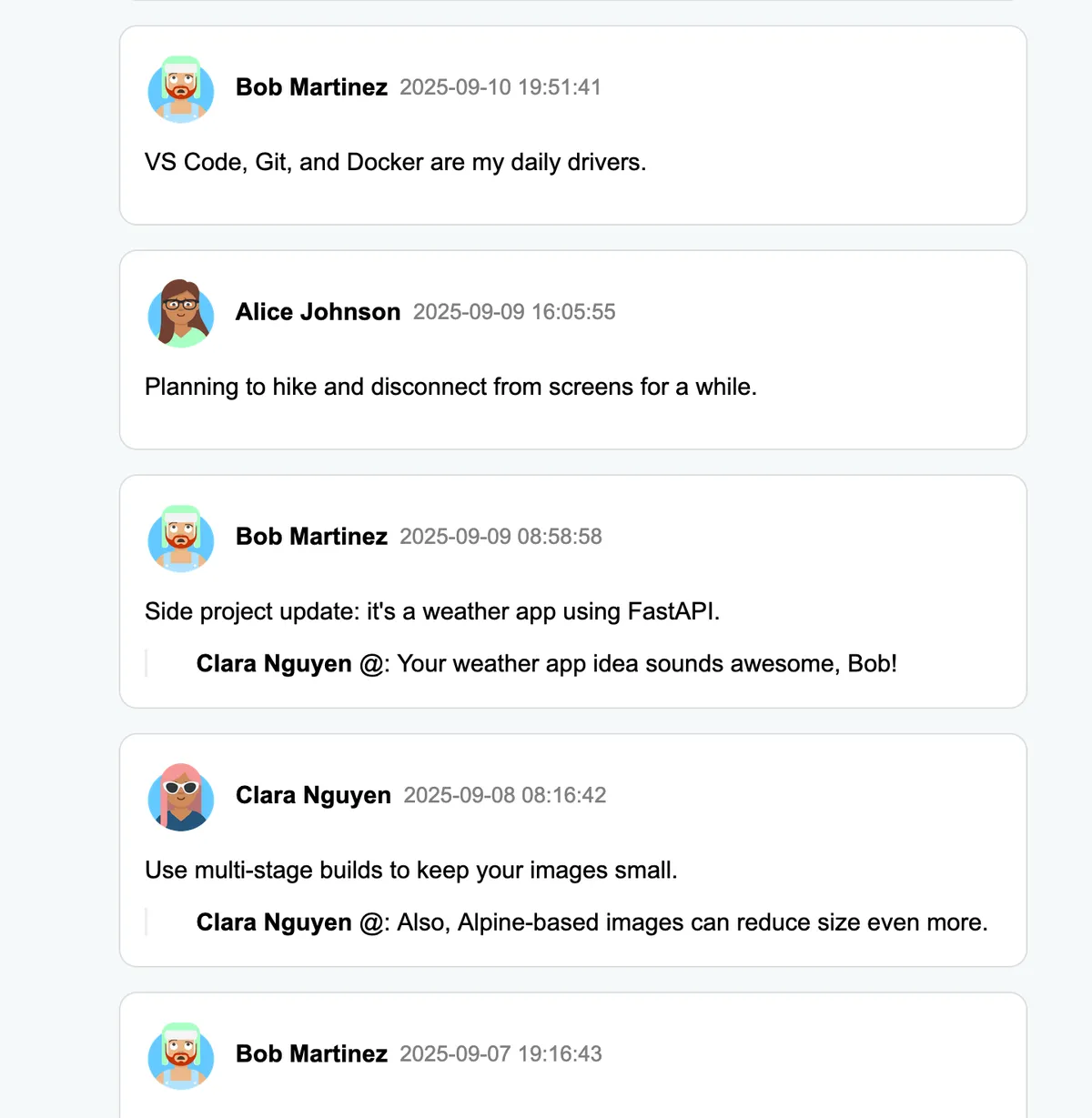
The program reads the feeds you point it at, and then displays them; linking together the replies from the people you follow.
The included sample feeds are just simple json files. Why Json? It's standard, there is tons of tooling to parse it correctly, and if you wanted to create a /social/index.html that parsed /social/social.json for normal web browsers you could.
Additional Benefits
- Alice is an intelligent and beautiful woman on the internet. Alice writes an interesting article on something she cares deeply about. The only comments Alice will see are from the friends that she follows.
- Danny is a teenage boy that plays DnD. Danny and his friends like to post about their adventures online. The only comments Danny and his friends will see are their own comments; since they don't follow the people that would bully them, they will never see those comments.
- Barney is a horrible troll. No one follows Barney because he has nothing interesting to say. Barney spends his day screaming his ignorance into the void and no one has to look at it, because no one follows him.
This is just going back to what the original social networks were about, sharing with your friends, not random trolls on the internet. Just imagine, a system of positive feedback from your friends instead of being torn down by random internet trolls you don't know.
see also: https://github.com/tanrax/org-social
* note : I don't social media; I don't twitter,instagram,facebook,mastadoon, or anything else. so take these suggestions with a grain of salt.
** find a flaw in my thinking here? let me know and I'll update the post: msced@fastmail.com